
Cinema, once a boundless canvas for innovation, now often feels trapped in a cycle of risk aversion and homogenization. As a critic, I long for the days when the medium dared to challenge norms, both technically and narratively, creating works that left an indelible mark on audiences and the art form itself. But today, innovation seems more like a slogan than a reality, hindered by both the mechanisms of film politics and a cultural shift toward safer bets.
The core problem lies in the over-commercialization of storytelling. Studios, driven by the promise of guaranteed box office returns, churn out sequels, remakes, and franchise films, leaving little room for experimental works. The irony is palpable: the same industry that celebrates “visionary directors” in awards circuits routinely sidelines genuinely bold projects. This pursuit of “calculated innovation” — the kind that can be marketed, tested, and sold — results in films that appear fresh on the surface but lack the daring essence that defines timeless cinema.
Film politics also plays a role in stifling innovation. Festivals, funding bodies, and awards committees now often emphasize messaging over artistry. While it’s important for cinema to reflect and engage with pressing societal issues, prioritizing thematic alignment over craft risks turning films into moral essays rather than emotional and intellectual experiences. In this climate, even independent cinema, once a bastion of experimentation, is increasingly curated for palatability, adhering to frameworks that ensure festival success but limit creative freedom.
This trend comes at a cost: the universal and enduring power of cinema. What makes film a unique medium is its ability to transcend boundaries, to make us feel something unnamable, to articulate what words cannot. The push for formulaic innovation — a new visual trick, a fresh face, a recycled story cloaked in current trends — reduces film to a product. It forgets that some of the most impactful cinema was not made with the intent to fit into a box, but to break it entirely.
What the industry needs now is not just a change in films, but a change in the culture around filmmaking. Studios and audiences alike must embrace risk, and funding systems must prioritize artistry over marketability. Otherwise, the essence of cinema — that fleeting magic which moves us, surprises us, and stays with us for decades — risks becoming a relic of the past.
True innovation isn’t about flashy new tools or rehashed narratives; it’s about capturing the timeless, ineffable human experience in ways that challenge and inspire. It’s not an option for cinema to reclaim this; it’s a necessity.
A quintessential example of European cinematic innovation can be found in Andrei Tarkovsky’s The Mirror (1975), particularly in the dreamlike sequence where a woman washes her hair as the ceiling suddenly collapses in a rainstorm.

Tarkovsky’s mastery lies in his ability to evoke profound emotions and metaphysical contemplation through poetic visuals. In this scene, the interplay of natural elements—water cascading through a domestic space—transforms a mundane moment into something transcendent. The sequence defies linear storytelling and logical explanation, immersing the audience in the subjective flow of memory and emotion.
Unlike many modern films that use spectacle for instant gratification, Tarkovsky’s approach demands patience and introspection. He wasn’t afraid to create ambiguity, trusting the viewer to find meaning in the spaces between. This type of visual innovation, grounded in the exploration of universal human experience, feels increasingly rare in an era where films often prioritise clarity and accessibility over challenging their audience.
A contemporary example of visual innovation in European cinema is found in Ruben Östlund’s The Square (2017), particularly the unforgettable performance art sequence where a man embodies a feral ape at a high-society gala.
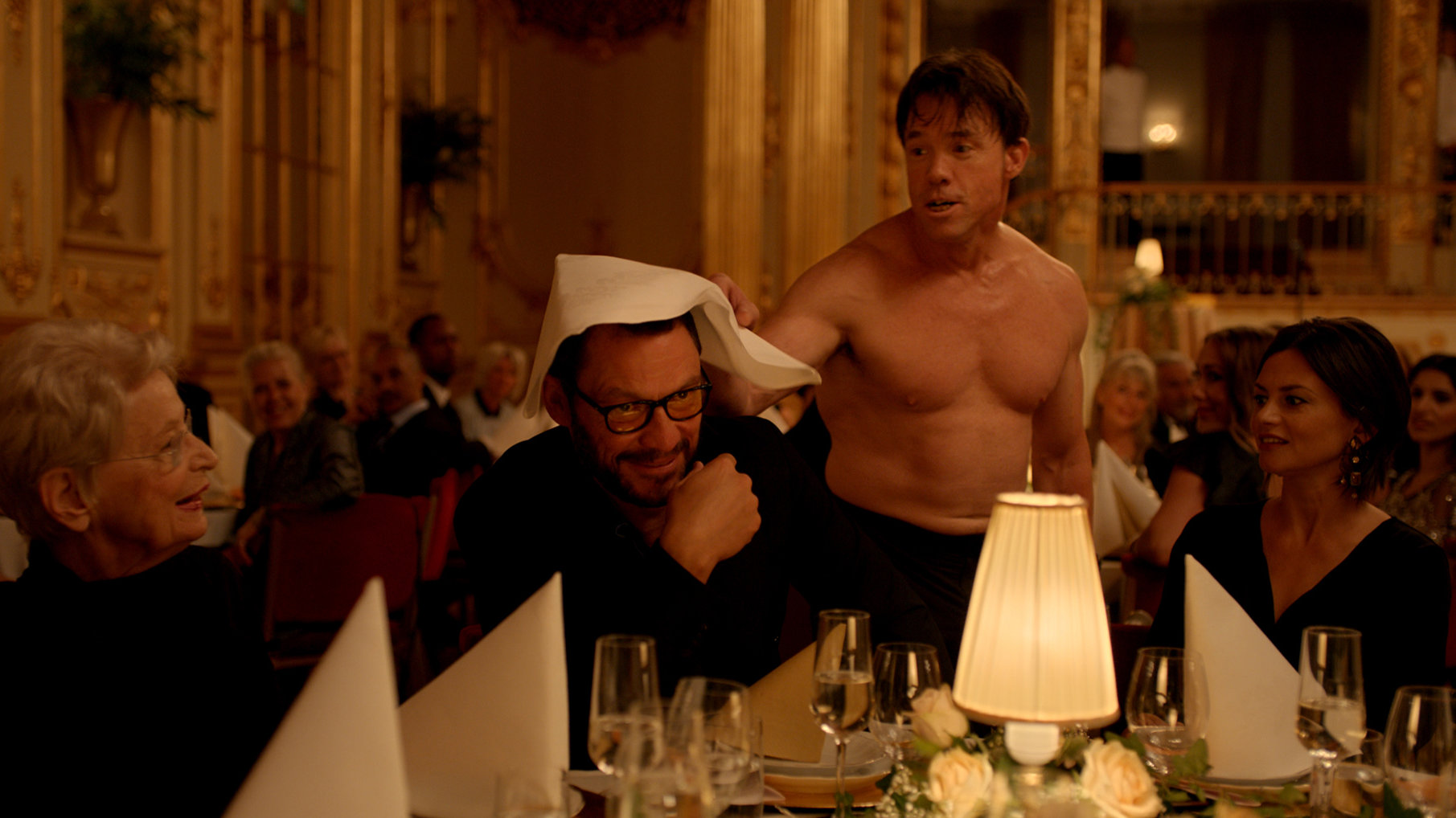
This scene masterfully combines discomfort, absurdity, and critique. The choreography and raw physicality of the performer disrupt the polished environment, turning a luxurious dinner into a primal confrontation between civility and chaos. The camera’s unflinching gaze forces viewers to sit with their discomfort, mirroring the guests’ struggle to reconcile their passivity with the escalating aggression.
Östlund’s approach exemplifies how contemporary filmmakers can use visual storytelling to interrogate societal norms. The sequence isn’t innovative in a technical sense—it doesn’t rely on flashy effects—but in its raw, audacious staging and its refusal to cater to easy interpretations. It’s a rare example of a modern film pushing boundaries by embracing ambiguity and risk, making it a standout in a cinematic landscape that often prioritizes safety over challenge.
The career trajectory of Romain Gavras, son of the renowned Greek filmmaker Costa-Gavras, offers an intriguing look at the evolution of a filmmaker caught between his father’s legacy of politically charged cinema and the demands of contemporary, commercially driven media. Gavras, who initially gained attention for his bold, politically-infused music videos, has faced the criticism of reducing complex social issues into flashy, surface-level spectacles, effectively becoming a “music video of social problems.”
Romain Gavras first earned widespread recognition with his music video for M.I.A.’s “Born Free” (2010), a visceral, confrontational piece that depicted the violent expulsion of a red-haired minority from a dystopian society. The video, full of arresting imagery, generated significant buzz due to its stark political themes and shocking violence. It wasn’t just a music video—it was a commentary on the displacement, persecution, and brutalization of marginalized groups. The video was an example of how the medium could be used to provoke and question social issues, creating a powerful visual statement.
However, as Gavras transitioned into feature filmmaking, particularly with films like The World Is Yours (2018) and Le Monde est à toi (2018), he seemed to move further away from the complexity of his father’s political cinema. Instead, his style evolved into a slick, often stylized approach that blends sharp visuals and dark humor with themes of rebellion and social critique. While his films remain undeniably political, they increasingly prioritize spectacle and trend over the nuanced, socially transformative messages his father was known for.
Gavras’ transition from provocative music videos to feature films with flashy, mainstream aesthetics raises a critical question: has he, like many filmmakers today, allowed the pressures of the modern film industry—one that values visual appeal, accessibility, and marketability—to dilute the depth of his social critique? While his films often address issues of class, rebellion, and corruption, the narratives tend to lean more on fast-paced action, snappy dialogue, and stylish imagery than on the weighty political analysis that his father mastered in films like Z (1969) and State of Siege (1972).
This shift towards a “music video of social problems” style can be interpreted as a reflection of the modern cultural climate, where films and media content are consumed rapidly and without much lingering introspection. There is a tendency in contemporary filmmaking to prioritize immediate visual impact, as opposed to the slow-burn critique that encourages deeper reflection and engagement with societal issues. In the pursuit of broader audience appeal, Gavras’ films, while still socially conscious, risk oversimplifying the real-life struggles they depict, reducing them to catchy, momentary snapshots rather than complex, sustained discussions.
Ultimately, Gavras’ work reflects the tension between artistic vision and the demands of the entertainment industry. While his music videos certainly offered a potent critique of societal issues, his feature films, much like his contemporary peers, sometimes prioritize style over substance, a symptom of a broader trend in cinema where social problems are often presented in easily digestible, visually arresting formats. Whether this is a conscious evolution or a result of industry pressures, it’s a reminder of how cinema can sometimes blur the line between impactful art and commercial entertainment, leaving a more transient impression than its predecessor’s profound political legacy.
The idea that innovation in art, particularly in cinema, might be a “bourgeois concept” raises a provocative question about the relationship between artistic progress and social class. Traditionally, innovation in the arts has been associated with breaking free from established conventions, challenging the status quo, and creating something new that can shift cultural paradigms. Yet, in today’s context, especially within a capitalist framework, innovation in film can often seem like a product of privilege, catering to affluent markets or serving corporate interests.
In a way, the concept of innovation in cinema has been co-opted by the very systems of power it once sought to challenge. In the early 20th century, for example, avant-garde filmmakers like Dziga Vertov, Jean-Luc Godard, and Andrei Tarkovsky used the medium to question political, social, and artistic norms. Their innovations weren’t simply technical; they were radical challenges to the way cinema represented reality and ideology. They sought to use innovation as a tool for subversion and enlightenment, pushing against bourgeois ideologies by creating films that questioned the way society viewed itself.
Today, however, the notion of “innovation” in film is often tied to marketability and mass appeal. In Hollywood, especially, films are frequently marketed as innovative through flashy visual effects or groundbreaking CGI, but these innovations tend to serve the primary goal of maximizing profit rather than fostering artistic or social transformation. In many ways, contemporary cinema’s focus on “innovative” blockbusters—sequels, prequels, remakes, and cinematic universes—does not aim to challenge the status quo, but to reinforce it. The drive for technological innovation, like the 3D or IMAX craze, for instance, often feels like a superficial veneer to attract audiences rather than a genuine effort to explore the medium’s potential.
This commercialization of “innovation” has led to a situation where true artistic risk-taking is often sidelined in favor of what’s guaranteed to make money. Thus, innovation has, in some ways, become a bourgeois pursuit—not in the sense of being created for the elite, but because it often serves the interests of large corporations and the wealthy entertainment industry. True subversive innovation, which once had the power to disrupt societal norms, is now less accessible to independent filmmakers who lack the resources to make bold statements.
But does that mean innovation is no longer impactful? Perhaps. But I would argue it’s still possible for innovation to have impact, albeit in more hidden or niche spaces. Independent filmmakers, smaller production companies, and experimental directors continue to push boundaries, though often without the same level of recognition. Film festivals, art-house cinemas, and online platforms offer a space for more radical forms of innovation that aren’t beholden to the demands of big-budget entertainment. These filmmakers often innovate through content, form, and method, not just technology, creating works that engage deeply with social issues or explore new ways of storytelling.
In this sense, innovation is not dead—it’s simply more difficult to recognize or access, buried beneath the weight of commercial entertainment. While the dominant discourse around innovation might be captured by mainstream cinema and its focus on spectacle, the true spirit of innovative filmmaking, which seeks to challenge and expand the way we see the world, remains alive in more marginalized, independent, and experimental spaces.
In conclusion, innovation is still impactful, but it has arguably lost some of its radical potential in the face of capitalism’s influence on film production. The idea of “innovation” has, in many ways, been appropriated by the very forces that once sought to be challenged. However, as long as independent filmmakers continue to defy conventions and explore new avenues for storytelling, innovation in cinema remains a powerful tool—though perhaps not in the way we once imagined it.
the proliferation of film festivals that increasingly mirror the formats and priorities of the major, well-established ones can, ironically, stifle true discovery and experimentation. As the film festival circuit expands globally, it often becomes a space where the same types of films—those that fit into easily marketable categories or have been honed for festival success—dominate. This trend reflects a growing concern that the focus has shifted from fostering raw, groundbreaking cinema to promoting films that align with specific, recognizable formulas.
Many smaller or newer festivals aim to replicate the success of giants like Cannes, Venice, or Sundance, adopting similar selection criteria, industry-driven programming, and prize structures. While these large festivals do play an essential role in bringing attention to important films, their influence on the broader festival landscape has led to a certain “homogenization” of the circuit. As a result, numerous festivals—especially in the age of streaming and digital submission platforms—are unintentionally prioritizing films that align with commercial tastes, trendy social themes, or a pre-existing reputation, often leaving little room for truly unpredictable or experimental cinema.
This trend also intersects with the commercialization of art. Many festivals now operate with sponsorships, press coverage, and industry partnerships in mind, leading to a kind of “branding” of films that fits neatly into the market’s expectations. As a result, the same kind of films—those with a blend of social relevance, prestigious backgrounds, and high production value—seem to circulate throughout the festival world, while more daring, niche, or avant-garde projects struggle for visibility.
True discovery, in the sense of uncovering new voices or unexpected, groundbreaking films, becomes more difficult when so many festivals are constrained by the same pressures. What was once a space for bold experimentation and risk-taking is increasingly an arena for films that fit within recognizable, marketable frameworks. The result is that many filmmakers and stories that could truly innovate—whether by breaking new ground in terms of form, style, or content—are pushed to the margins, unable to find a platform where their work can be celebrated without commercial expectations.
On top of this, the dominance of a few “top-tier” festivals means that those films that don’t make the cut can be quickly dismissed, and new filmmakers can find it harder to get noticed unless they fit certain molds. This creates a feedback loop where the same styles and themes are recycled, and true discovery becomes more rare. For instance, experimental films or those that critique festival culture or commercial cinema may never make it into the spotlight, further limiting the diversity of voices and ideas being heard in the global film discourse.
Ultimately, the overcrowded and increasingly formulaic nature of the festival circuit can make it harder to stumble upon fresh, unconventional talent. Discovery becomes more about finding a new version of what we’ve already seen rather than unearthing something truly revolutionary or radical. For cinema to remain vital and alive, there needs to be room for the unexpected, the raw, and the innovative—spaces where filmmakers are encouraged to break all the rules without the pressure to conform. But in today’s landscape, that’s becoming an ever-diminishing prospect.
 FILMMAKER
Insightful and thought-provoking read! I guess one thing independant and innovative film makers can do is create their own network of sharing, support and collaboration, ensuring it remains appealing for funding and continuous investment from sponsors.